Showing posts with label Montalban. Show all posts

Monday, June 11, 2007

On Stewardship: Reflections from the CBR Volunteer Workers Basic Training Program

I wasn't able to really relish the latter months of summer vacation as I was deeply involved in setting-up the Community-Based Rehabilitation (CBR) Program in San Mateo, Rizal. After a year of scheduled meetings with the key stakeholders in the municipality, implementation of research and extension teaching services (embedded within the curriculum of OPST 131: Introduction to Community Health), the time is finally getting ripe to start anew. Of course, there are many obstacles yet to conquer, one of which is the result of the recent elections where the mayor I was planning with did not win. It has to be ensured that what was set be properly endorsed to the incoming municipal administration, otherwise plans will be set back. The CBR Program in Montalban is assured of its place and support by their municipal government, but consultancy programs must be properly set to ensure a smooth exit.

The CBR Volunteer Workers Basic Training Program was successfully implemented at the Nuestra Señora de Aranzazu Parochial School from May 28 to June 1, 2007, attended by participants from both San Mateo and Montalban. Unlike previous runs of the Training Program which usually lasts a month, this only ran for a week, focusing primarily on the attitude and basic CBR knowledge of the CBR Volunteer Worker. The original training program included more technical topics ranging from basic anatomy, neuroanatomy and human development to PT, OT and SP assessment and treatment. This focused on the CBR program, the roles of the CBR Volunteer Worker (focusing more on the transdisciplinary approach) and it being a vocation. The training program turned out to be a seminar and retreat rolled into one, focusing on empowering the participants and forging their commitment and willingness to serve persons with disabilities (PWD's) within their community. With this as focus of the seminar, the participants will be ready to take in the more difficult technical aspects of the training (which will be provided year-round by the incoming interns and clinical supervisors as part of the CBR training program). We realized that it is better to create empowered willing volunteers than half-hearted trained intelligent workers. An empowered willing volunteer is more than ready to learn (in fact, seeks to learn!), and is much easier to teach than a worker with vested interests. It is sad to note that the "volunteer" ceases to exist once his/her services are equated with monetary compensation. Most of the problems related to the CBR Workers in Montalban (note, the word "volunteer" was dropped mysteriously) I suspect started when they were given monetary allowance by the municipal government as appreciation of their services. In time, and I guess it is sadly inevitable, they unconsciously equated it with "salary"… payment for their services. It was the design of the training program to instill a true sense of volunteerism – a vocation, essentially… among the new CBR Volunteer Workers.


The training program culminated in a mass celebrated by Monsignor Mediarito, the parish priest of Nuestra Señora de Aranzazu shrine, who fully supports the program and recognizes it as a ministry activity of its parish. Providently, the gospel on that Friday Mass features the barren fig tree curse by Jesus. Monsignor Mediarito provided a very relevant homily which inspired not only the graduate participants but also the rest of the church attendants. Here are the thoughts on the gospel, heavily inspired by the homily:

All the famous philosophers are unanimous in saying that MAN does not live for his own alone. It has been often said "No man is an island…", "Man is a social being"… has been sung in numerous songs… "Walang sinuman ang nabubuhay para sa sarili lamang…" which further solidifies the Christian concept of STEWARDSHIP. One thing can be sure, MAN was not created by GOD to serve man's own means, but he was created to be a STEWARD of the earth, its creatures and everything on it. He was created for others… his gifts and talent was not given for his own glory but for other. In our quest in discovering God's will, one thing surely to guide us is the knowledge that this will is not directed towards ourselves… NEVER to ourselves… it is ALWAYS directed towards OTHERS… for the service of others. We are expected to use our gifts and talents to the fullest, not for our own, but for the betterment of our fellowmen. Each of us, is called to a special vocation… whether it is for bringing joy to the sorrowful, hope to those down with despair, healing to the sick, guidance to those who are lost, and empowerment to those who are weak and disabled… the list goes on. We just pray that when the time comes when the Lord asks from us what He has given and how we have used it; when He asks for our FRUIT, just as when He asked the fig tree… that we will be ready to offer him our fruits.

Being a CBR Volunteer Worker is a vocation to serve. It is directed towards empowering those whom we call persons with disabilities (PWD's). And knowledge alone is not sufficient to help them, but primarily a desire… a genuine to help others. As rehabilitation professionals, we are expected to have a genuine desire to help others, more than a need to fill our pockets. It is amazing to note that 2 of my closest friends who are CBR Workers (Mommy Es and Tatay Ben) have passed away speaking their final words to me, "Sir Rev, kung bigyan lang ako ng pagkakataon na mabuhay pa, gugustuhin ko pa maging CBR Worker…" Amazing. Inspiring. It makes me reflect, that amidst our quest to enrich our knowledge and skills with cutting-edge advancements in our fields, whether we are also seeking to strengthen our resolve… the spirit that drives us to serve other people.
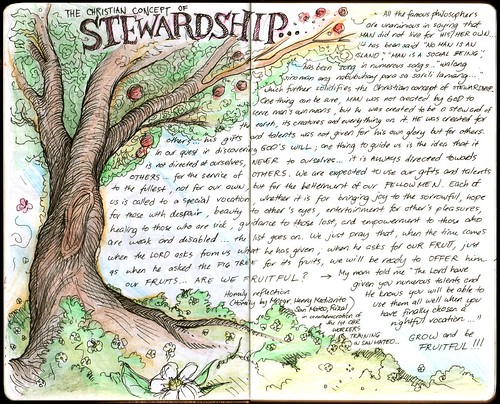
2007-06-02

The above is my journal entry featuring my noted thoughts on stewardship. Pictures from the CBR Volunteer Workers Basic Training program can be seen at my Flickr account.

Friday, February 9, 2007

At the Gates of the Tagalog Titan


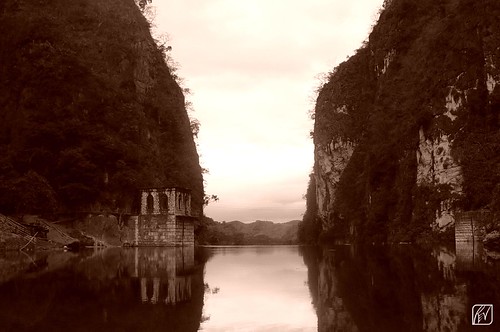
The Gates of the Tagalog Titan 3, originally uploaded by revcruz.


Every journey back from the regular group reflection activities I facilitate with my interns at Wawa in Montalban, Rizal is like emerging from a fantasy world rich with mythological, spiritual and historical significance. The sight of the dam waterfall flanked by the towering limestone walls is enough to leave anyone in awe at its beauty. The vista of the magnificent gorge, combined with the soothing ambient notes of the rushing waters creates a contemplative atmosphere, being humbly enveloped within a virtual hug from Mother Nature.


This is the home of Bernardo Carpio, a legendary figure in our rich Philippine Mythology. Although numerous versions of his story exists, owing to the fact that Filipino folklore is mainly traditional - that is, handed down from generation to generation through oral accounts, the basic form of the story recounts of a local lad with superhuman strength and abilities being trapped between two great rocks in the mountains of Montalban, Rizal. A version depicts Bernardo Carpio as a giant, as supported by the presence of enourmous footprints he is said to have left behind at the mountainside (One of the caves there houses a unique stalactite formation that locals claim to be the teeth of this giant). This version of his myth is etiological in nature, as this provided early Filipinos an explanation for the occurences of earthquakes. The area in which Bernardo Carpio is said to have been trapped is interestingly the same site where the Marikina Valley Fault system runs through.


The name 'Bernardo Carpio' is obviously Spanish, showing perhaps that the myth did not originate from Pre-Spanish times in Filipino history. If it did, it may have been modified from is earliest forms during the Spanish occupation. In another version of the legend, Bernardo Carpio is said to have been born of ordinary parents. As expected from the basic form of the story, the boy demonstrated unusual strength, which prompted the parish priest to christen him with the name of a Spanish legendary hero, Bernardo del Carpio. Interestingly, this is a foreshadowing of the type of life that Bernardo Carpio would lead. As he grew up, the atrocities of the Spaniards became more and more unbearable leading to the formation of the early revolutionaries (Note that the Spaniards occupied the Philippines for 400 years, so do not confuse this with the Katipuneros' time). Bernardo Carpio would be invited by the revolutionaries to be part of the rebellion. His strength was dreadfully feared by the Spaniards, and in order to neutralize him, they conspired with an enkanto, a local shaman, to trap him through supernatural means. Setting up a meeting for a truce, the Spaniards lured him into the caves where he woul be magically trapped by huge boulders and chains. Attempts to save him would prove futile and fatal to the rescuers. It has been said that he is still living beneath the rocks, and eventually when he will be free and last chains that binds him are broken, "the enslavement and oppression of the Filipino race will be replaced with freedom and happiness." - a Filipino Messiah of sorts.


Aside from its mythological significance, Wawa is also bestowed with an abundant historical heritage. The familiar Wawa Dam was actually constructed by the Americans on 1909 to serve as a water reservoir and pumping facility to boost the capacity of the waterworks system of the growing Manila city. During Japanese occupation, the gorge and the dam area became a strategic holding point. The site became a battle field with the Americans attempting to retake the area amidst fears of the Japanese blowing up the dam (This would be very disastrous, as this would cause destruction and flooding of neighboring towns). The mountains would then become the grave of numerous fallen Japanese soldiers, and a marker was actually placed on top of the cave paying homage to the bravery of these soldiers. Numerous holes within the caves and mountainside can be seen and locals claim that these may have been sites where the rumored Yamashita treasures and golden buddhas may have been hidden.


But in terms of history, the most important of which would be the legacy of the Pamitinan Cave. It has been said that Andres Bonifacio along with his revolutionaries (Katipuneros) would seek refuge in Pamitinan Cave as a clandestine meeting place. This would be the notable event in which Bonifacio and his katipuneros would shout the KKK's (Kataastaasang Kagalanggalang Katipunan ng mga Anak ng Bayan) first cry of freedom. This was on April 1895, almost more than a year earlier than the more popular "Cry of Balintawak" on August 1896. On the walls of the cave was written in charcoal the phrase "Viva La Independencia Filipinas!". Andres Bonifacio (an admirer of Jose Rizal, who was reportedly to have made a pilgrimage earlier to this same cave) was often considered by historians and critiques to be rash and impulsive, in comparison to the military strategists of the rebellion (like Aguinaldo). But it has to be said that Bonifacio may be quite deliberate and deeply thoughtful of the selection of this refuge. Why of all possible hiding places did he choose this particular cave tucked within the mountains of Montalban, Rizal?


Consider these points. The katipuneros met in Pamitinan Cave on April 1895, particularly on a Good Friday, which in Christian tradition, commemorates the crucifixion of Jesus Christ at Calvary. In Filipino culture, it is a day of the "penitensya", where Filipino Christians do penance even to the point of self-flagellation and real reenactments of the crucifixion. A cave in Filipino culture is a rite of passage, where successful emergence and survival signifies the integrity and purity of the devotee. The katupineros met in Pamitinan Cave, not only to talk in secret about plots of revolts, but also to undergo a spiritual purification process, an eventual preparation for leadership. The cave according to myth, is the site where Bernardo Carpio, the "imprisoned King of the Tagalogs" is struggling to break free from bondage. Bonifacio apparently was telling the Filipinos and his katipuneros that they should be ready to face sufferings if the Katipunan was to play the role of redeemer of the people from their centuries-old yoke. He was obviously paying homage to Filipino folklore, that is deeply embedded in the psyche of the locals; devotion to Christan traditions, that is also reflected in the deep spirituality of the converts; and advocacy to political freedom from Spanish oppression and atrocity. The Katipunan would later emerge from the cave, purified and devoted to their roles, infused by the messianic spirit of Bernardo Carpio. History books fail to highlight the deep spirituality of the Katipuneros, and this would just be accounted for as an attempt of the Katipuneros to hide and escape. But it seems that Bonifacio had a lot more in his mind... and heart.


Myth and spirituality is deeply infused in the Filipino psyche. It is still evident nowadays in our people's attempts for freedom from corruption and poverty. The apparent lack of spirituality of our leaders and respect to our Filipino heritage would seem to compound our nation's fast plummet to mediocrity. The ancient Filipino concept of “pamathalaan” (a conjunction of “pamahalaan” or government, and “bathala”, God or creator) or God-centered governance has been evident in the Katipunan's beliefs. Ancestral spiritual movements (Rizalista cults, and present derivatives of Katipunan) are seeking for the adoption of such form of governance as a solution to our nations' problems. Perhaps, they are right. Perhaps, our leaders should go to the caves (they act like cavemen anyways) for purification and instill within themselves the true spirit of leadership.


Interesting, isn't it?


I will be conducting another group reflection activity to Wawa, particularly a climb to the Pamitinan Cave on March 1, 2007, 1-6 PM. It will involve an hour hike to the cave (if the waters are still deep enough to be crossed) and an hour walk within the cave. Please contact me if you're interested in joining the interns in this climb. My photos of our previous activities in Wawa can be seen in my Flickr account sets: Montalban Magic, 3rd Batch Pictures and 4th Batch Pictures or my Multiply photo set: Montalban Magic. Be part of the 5th Batch Pictures.


(Sigh... I miss PI100...)

Sunday, January 7, 2007

Aranzazu

Today is officially my first day of work for the year as I have finally recovered enough strength and function from my bout with bronchitis. I know it’s Sunday, but that is what being part of the Community-Based Rehabilitation Program of the University of the Philippines Manila College of Allied Medical Professions (CAMP) entails: being able to respond to the schedule and activity of the community. As most of you (CAMPers, that is) will understand, the CBR Program has been in Montalban for quite a long time already (16 years to be exact), and plans for sustainability and transition was only realized in the last 7 years. I am the lucky person designated to ensure the sustainability of the CBR Program in Montalban, Rizal (Sustainability has been defined as financial support, municipal legal mandate and setting-up of physical and organizational support structures, all of which have been more or less achieved), ensure a smooth transition to the next site, and prepare the community of the next site for the CBR Program. San Mateo, Rizal (the town before Montalban, if you take the long road) was chosen as the next site for objective (it fulfills the reqirements for an ideal community for CBR) and logistic reasons (geographic location to original site and UP Manila). I have to juggle my time with the available schedule of municipal officials and personalities, with my supervision, with my lectures at CAMP). There are times when I have to have a class in Manila, and run to Montalban/San Mateo, for a "talakayan" seminar with the locals or a meeting with a barangay captain. So you can see how difficult it is to be head of the CBR Program, and it is one of my chief sources of depression and anguish that some colleagues not only appreciate the efforts that the CBR staff puts into this noble cause, but even come to the point of poisoning the minds of students and fellow faculty members about how seemingly pointless the program is to them, based on hearsay, or their very limited experience within the program or with the staff (which does not necessarily have to be all good, but to my opinion, a bad experience or hearsay can never be used to come up with a conclusive opinion about the whole program). With this, I salute the staff, past and present, for having the heart and resolve to serve and teach amidst the atmosphere of resistance to what we do and the challenges that community work entails.

Today, we met with the new parish priest the Nuestra Señora de Aranzazu Shrine in San Mateo, Rizal, Monsignor Generoso “Henry” Mediarito, for the reason that we are seeking the support of the parish in providing the backbone of the organization of persons with disabilities (PWD’s), as the local government unit (LGU) of the municipality is ready to commit in providing the infrastructure and support people (which includes the barangay health workers, the future CBR workers and others), that is, providing the service aspect (rehabilitation and community education) of CBR. The municipality, in my prior meeting with their new mayor, Ariel Diaz and the municipal health officer, Dr. Sochaco, has already agreed to the establishment of the CBR Program. The site of the CBR headquarters has already been identified and the barangay health workers are ready to be mobilized for survey and other preparation purposes. It is perhaps providence that Mnsgr. Mediarito is a very close friend of my parents, and has had prior experience with PWD’s in Tahanang Walang Hagdanan (which he aimed to integrate within parish activities when he was parish priest of Cainta, Rizal) that our meeting went along very smoothly. He was more than willing to institute the proposal within his parish, that he had already set this as an agenda in the next pastoral council meeting. So far, the social preparation for the next site is going smoothly.

One of the things that struck me in our meeting with Mnsgr. Mediarito was his resolve in changing the religious attitudes of the parishioners in San Mateo. He noticed that the parishioners seem more focused on the external manifestations of their religious practice, these are the ceremonies, the costumes and the regalities of the festivities and prayer activities, rather than the internal spiritual manifestation of faith. He confessed to us how sometimes he, as a parish priest has oftentimes been misunderstood and misinterpreted by his parishioners. He had to remove all the “bongga” activities whenever he discovered that these served more as obstacles to spiritual growth rather than supported it. It should be understood however that some of these “traditional” activities have been part of the Filipino culture that the parishioners have grown to be familiar with. (Thanks to our Spaniard colonizers, who have ingeniously transformed the ancient Filipino animistic beliefs to Christian devotions to ease the natives into the faith. Local historians even claim that some antique Sto. Niño statues were carved from “anitos”). There’s nothing inherently wrong with these activities, images or representations of the Christian faith, especially if these help enrich one’s spiritual experience and helps deepen one’s faith. However, it is an entirely different matter when these become the primary foci in one’s practice of faith (which has become one of the major critiques of the Catholic faith). Monsignor Mediarito further discusses that the activities that we organize, the things we do should always reflect a worthy goal, benefiting individuals and the community in the long run. According to an example he provided, we do not hold religious processions along public streets wearing white garbs to be seen by onlookers in the hope that they will be held in awe by its beauty and extravagance. We participate in these processions to be reminded of the virtues and values that these originally represented. Some individuals, we will realize (and this does not only happen in San Mateo, Rizal), during the feast days of their towns, will be so involved and invested in the preparation of the festivities that they forget the real meaning why these feast days are celebrated at all.

I realized that this extends beyond the religious domain, and pervades even other areas of our lives, workwise even. How often do we organize or participate in events for the sake of fulfilling an obligation or expectation, of trying to outdo other people and be recognized and be worthy of fame and praises, or of proving a point to embarrass other people? Sometimes we cover this, rationalizing that these actually fulfill a noble goal. It seems that we already live in a Machiavellian world, too focused and demanding in quantifying the results and looking good, that we have grown blind to the real purpose and mission of our work, our organizations and our lives.

This is indeed a great challenge especially for those involved in community organizing, an indispensable aspect of our work in CBR. As supervisors, we guide our students, interns and CBR workers in designing and organizing activities through a participatory process (which involves needs assessment and planning involving the stakeholders). But oftentimes, we notice them doing these things out of an “obligation” since this is expected of them, or for the “reward” of getting a good grade or approval, or even for the “competition,” that they will outperform the other groups. Sometimes, we have organized programs and activities for the main reason that the community will enjoy this and have fun, that we will look good and more likeable. There have been some activities and programs that have been implemented which when closely examined have been designed for things other than the objectives and beyond the mission of the program. Soetimes, these have even been cleverly “giftwrapped”, appearing to be fulfilling the objectives. But impressively, there were others which were honest to their purpose, implemented by proponents who were truly sincere in their work. It is indeed important that we be more conscientious when we plan activities or design programs.

With the lessons gained from the success and failures in Montalban, we'll be able to successfully establish and implement CBR in San Mateo, and in the future, adaptation in Rizal province and others. With this, we hope that the transition to San Mateo will be untroublesome and painless.

By the way, "Aranzazu" means “abundance of thorns” in Basque/Spanish...